
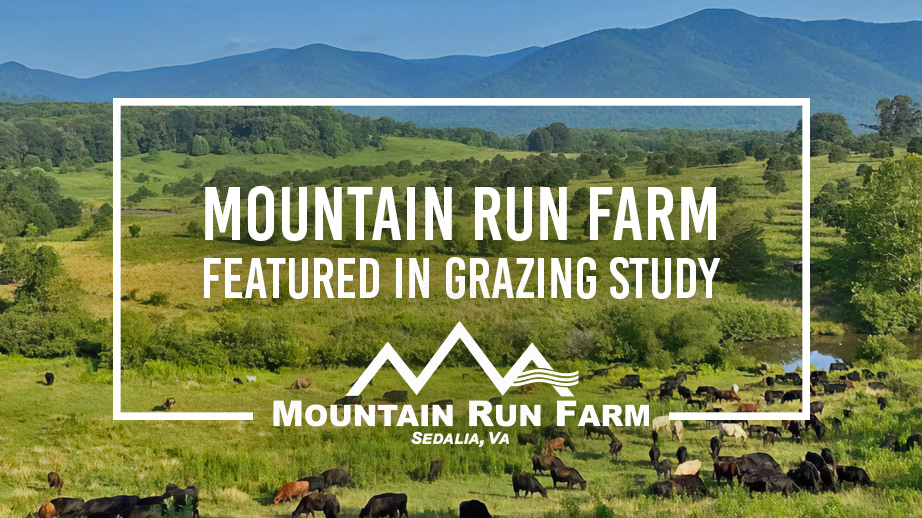
We are busy farming so we don’t update the blog often, but we wanted to highlight a grazing study we were featured in a few years back by The (NCAT) National Center for Appropriate Technology’s ATTRA Sustainable Agriculture program. We’ve been focused on transforming our land through holistic herd management for many years now and we are proud to be one of the farms featured in NCAT’s ‘Regenerative Grazing In the South: Case Studies from Virginia‘.
This study was also part of a hands on tour and workshop where we hosted Dr. Allen Williams of Understanding Ag, LLC and a group of farmers exploring the multi-faceted benefits of regenerative grazing. Thanks to our friend Brent Wills of VABF and Bramble Hollow Farm for connecting us with the ATTRA program and Dr. Williams. From the article:
“There is no reason NOT to do this!”
Around 2007, Ben Coleman started noticing that everything on the farm was sick, including the cattle, the land, the community, and their finances. In the quest to redeem all the damage done by the first 10 years of conventional farming practices, the Coleman family has changed its management to a more holistic and regenerative model. Part of the drive behind this change was to bring ecological balance to the land, and Mountain Run Farm is now seeing those benefits in real time. For the past three years, the Colemans have worked with representatives from the Virginia Breeding Bird Atlas to survey the return of more than 100 species of birds that are not normally seen in this region and invite back species that have been decimated by habitat destruction.
Mountain Run Farm is a pasture-based farm selling custom grass-fed/grass-finished beef in Bedford County, Virginia. Grazing management and soil health have become a focus for the Coleman family, who took over the 1,000+ acre farm in 1991. They operated the farm with conventional methods until around 2007, when they reduced chemical applications on crop and pastureland. In 2010, the Colemans sold all hay equipment, and the year-round grazing adventure began, with support from mentors like Ian Mitchell-Innes and Greg Judy. Since then, the farm has transitioned to a successful year-round grazing operation with several herds of grass-only beef cattle and has not purchased off-farm fertility or seed stock since 2007. Ben has not fed any hay to the herd at all in the last five years.
Ben started to learn more about holistic and regenerative grazing and realized that he was in a place where the only option to survive on the farm was to let go and start over. Certainly, a more sympathetic approach than “get big or get out.” He started calving with naturally adapted ruminants in the region to align his calves with the best available forages and reduce the need for intervention. Seeing the health benefits of his herd and reduction in losses from calving, Ben knew he was on the right track and continued to breed and select for the best calves that thrive on grass.
The livestock at Mountain Run Farm are carefully rotated around the farm based on a holistic grazing management plan, according to forage availability, seasonal changes, and management observations. Portions of the farm had off-stream livestock watering installed 20 years ago, but most of these structures were broken or not in use due to poor placement. To fully respect the ecosystem and the relationship between the land and livestock, Ben permits careful grazing of riparian areas and streams. This helps rejuvenate and heal those natural areas at the common boundary of the domestic and wild realms.
Ben’s work at Mountain Run exemplifies the ethic of care by listening to the land through observation and adaptation, instead of the ubiquitous heavy-handed approach of employing machinery and chemicals to make the land do something it wasn’t intended to do.